How to Tell If a Tree Is at Risk of Falling: 10 Signs and What to Do
If a tree near your house has started leaning or developed a crack in its trunk, you may be wondering whether it could fall or pose a serious danger. That concern can be even greater after a storm, especially if you notice damage that was not there before.
However, a tree's appearance does not always tell you how stable it is. A tree with green leaves can still have structural problems, while a tree that has leaned for years is not necessarily about to fall.
In this article, we'll explain the warning signs that a tree may be at risk of falling and what to do if you notice them.
We'll also cover when to keep clear and seek prompt help, and how a professional inspection can help determine whether the tree needs pruning, monitoring, or removal.
How to Tell if a Tree Is Going to Fall
Some tree hazards develop slowly, while others appear after a storm or sudden change in the tree's health.
Look at the tree from a safe location at ground level, paying attention to anything that has changed after a storm or recent work in your yard. Do not climb the tree, probe damaged areas, or walk beneath broken branches to get a closer look.
If a tree has suddenly leaned and the ground around its base is lifting, keep people away and contact a qualified tree professional promptly. Stay clear of large hanging limbs, and contact your utility if a tree or branch is touching power lines.
We recommend looking for these warning signs:
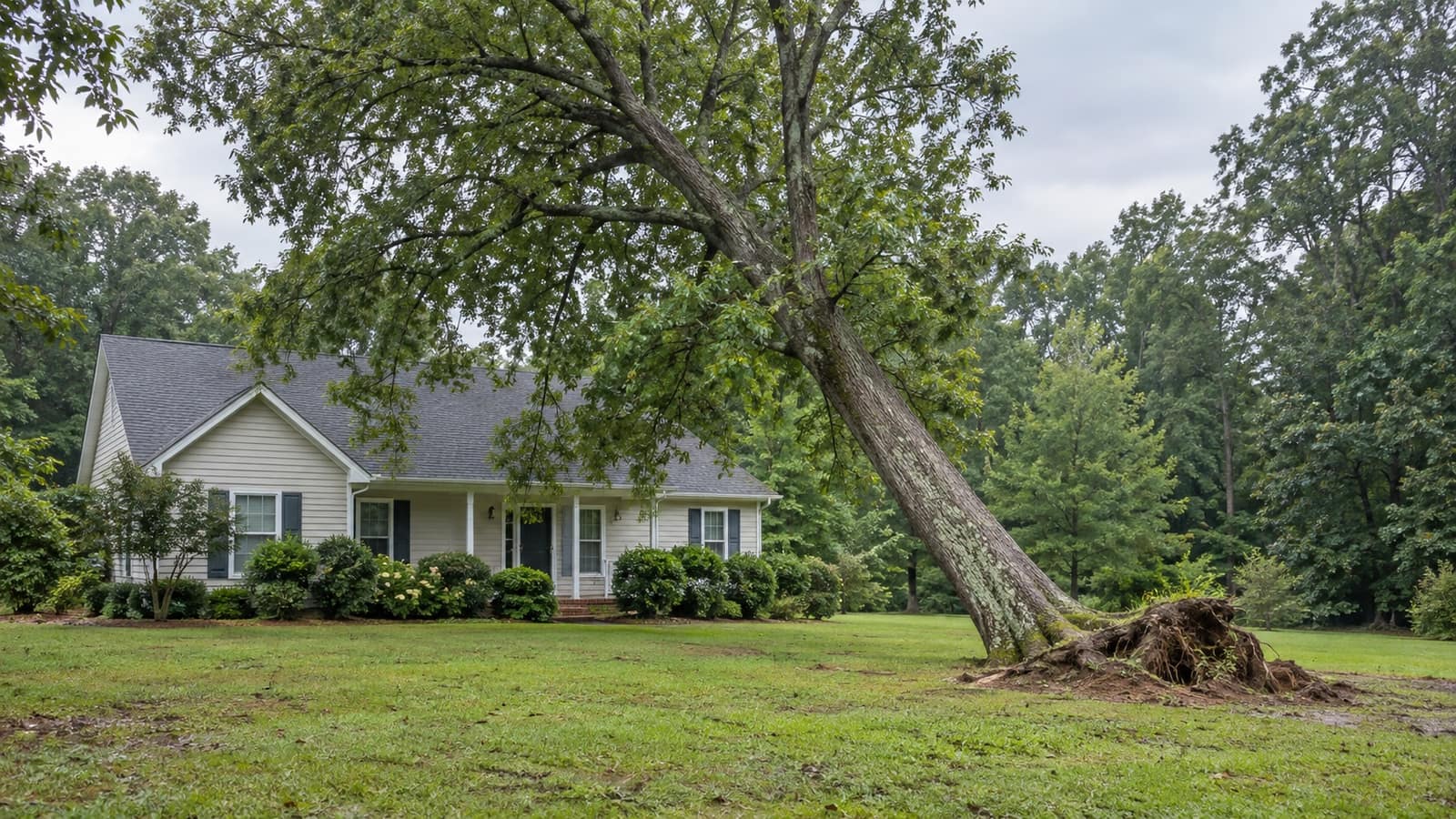
1. The Tree Has Started Leaning, or Its Lean Is Getting Worse
A tree that has leaned for years is different from one that has recently changed position. The important question is whether the lean is new, has become more pronounced, or appeared alongside changes in the ground around the base.
Pay particular attention to a lean that developed after a storm, especially if you also notice freshly cracked soil or lifting roots.
Use photographs you already have rather than approaching a potentially unstable tree to recreate an earlier view.
2. The Ground Around the Base Is Lifting, Cracking, or Moving
Fresh cracks in the soil, raised ground around the base, or roots lifting with attached soil can indicate a problem with the tree's support. This mass of roots and soil is often called the root plate.
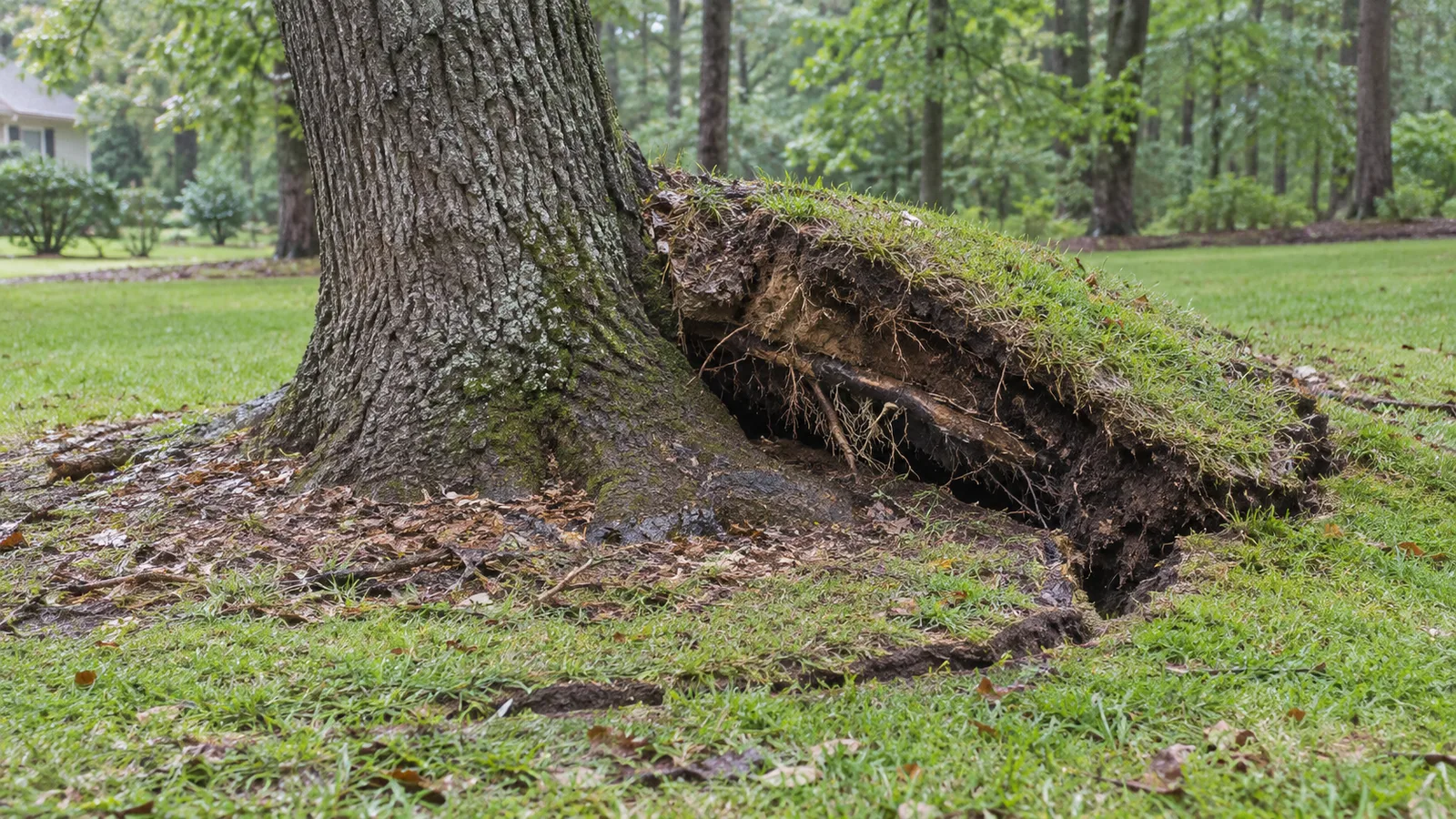
Visible root-plate movement is a particularly serious warning sign because it can indicate that the tree is actively losing stability. Do not approach the base to investigate, even if the trunk looks intact and the canopy still has green leaves.
If you notice this movement or a new lean accompanied by lifting ground, keep people and vehicles away from the area the tree could strike and seek prompt professional help.
3. New Cracks or Splits Have Appeared in the Trunk or Large Limbs
A fresh split in the trunk or a major limb deserves attention, particularly when it appears after a storm. Look for places where sections of the trunk or branch have visibly separated, without moving closer to inspect the opening.
A new crack at the junction between major stems is also a reason to arrange a prompt assessment. Keep people away from the area beneath the damage, and take photographs only from a safe location.
An older photograph may help show whether the damage is new or has changed. However, photographs alone cannot establish that a cracked tree is stable; a professional assessment of the tree and its surroundings is required.
4. Large Branches Are Dead, Broken, or Hanging
A large branch above your roof, driveway, or a frequently used part of the yard can be a concern, even when the trunk remains upright.
Watch for broken branches still hanging in the canopy, as well as large dead limbs.
A hanging branch above an occupied area needs urgent attention, and you should not stand beneath it to judge how securely it is attached.
The appropriate response depends on the defect and the risk it creates, which is why the condition of the rest of the tree also matters.
5. The Trunk Has Cavities, Visible Decay, or Significant Bark Loss
Look for hollow openings, visibly decayed areas, or substantial patches of missing bark on the trunk. These are reasons to have the tree's condition evaluated, rather than judging its stability from the canopy alone.
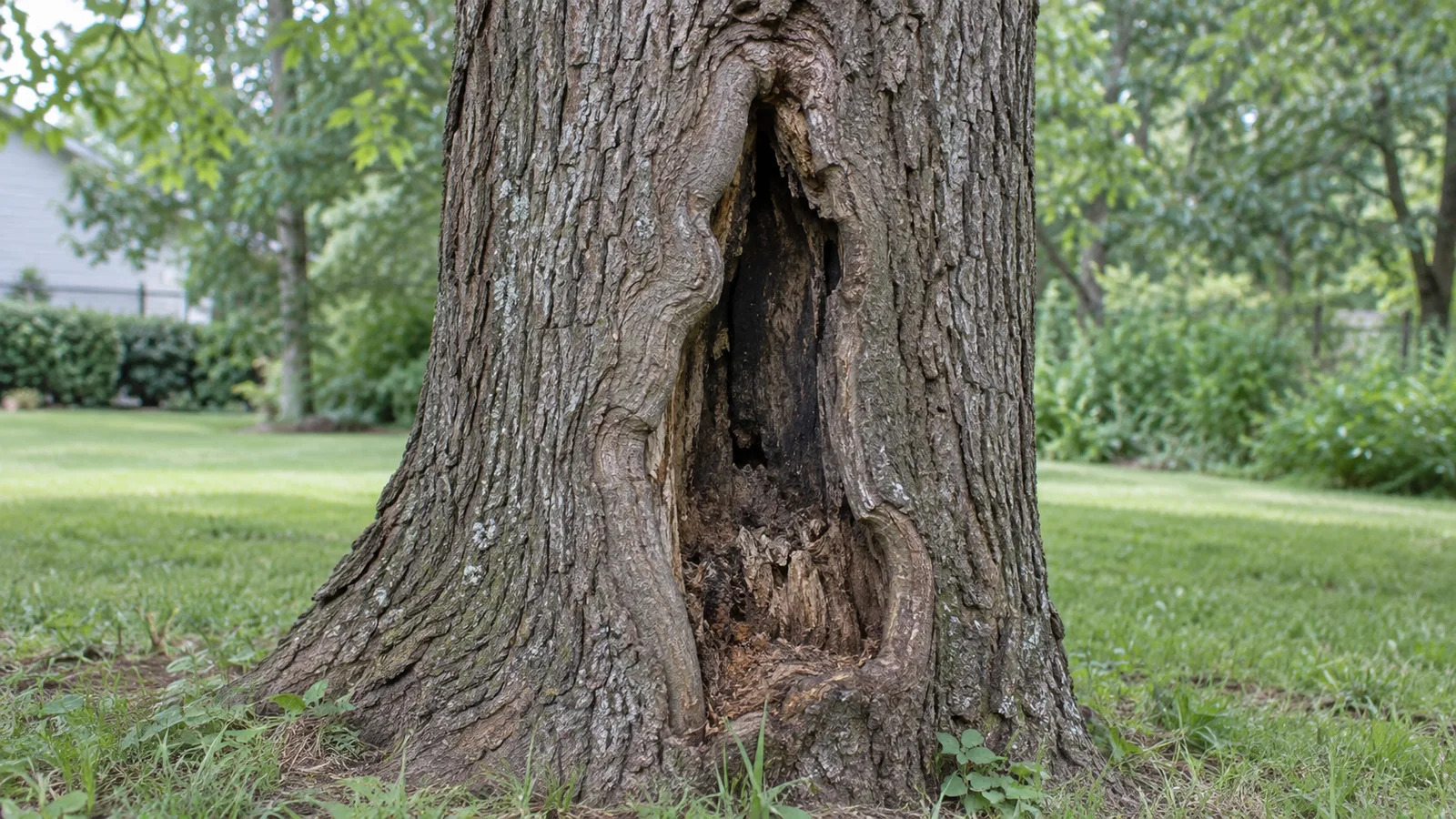
A visible cavity does not automatically mean a tree is about to fall or must be removed. The assessment needs to consider the tree's structure and other defects, not simply whether a hole is present.
When describing the problem, mention any other changes you have noticed, such as a new lean, a split, or recent damage around the roots.
Do not reach into cavities or probe damaged wood to try to determine the extent of the problem yourself.
6. Mushrooms or Shelf-Like Fungi Are Growing on the Trunk or Base
Mushrooms or hard, shelf-like growths called conks on the trunk or around the base can be clues to decay. Note whether the growth is attached to the trunk, appears at its base, or is elsewhere in the yard.
Fungal growth does not, by itself, prove that a tree is about to fall. Its significance depends on the fungus, the tree, where it is growing, and the extent of any decay.
A new fungal growth at the base is a reason to arrange an assessment rather than assume either that the tree is harmless or that removal is inevitable.
7. Roots Have Been Cut, Damaged, or Disturbed
Consider what has happened around the tree, not just what you can see above ground.
Utility trenches, driveway or patio work, excavation, and changes in ground level are all relevant to its condition. Heavy equipment or visible root cutting should also be mentioned when arranging an assessment.
A full canopy does not rule out compromised root support. A tree can still have green leaves while structural defects or anchorage problems are present.
Tell the professional where the work took place, approximately when it happened, and whether you saw roots being cut or damaged. That history helps provide context that a photograph of the trunk or canopy alone may miss.
8. Major Branches or Trunks Have Weak or Splitting Attachments
The places where large branches or competing trunks join deserve attention.
A narrow, V-shaped junction or an attachment with bark caught between adjoining stems can be a sign that the connection needs professional evaluation.
Visible splitting or separation at one of these junctions is particularly important to report, especially when the damage is new.
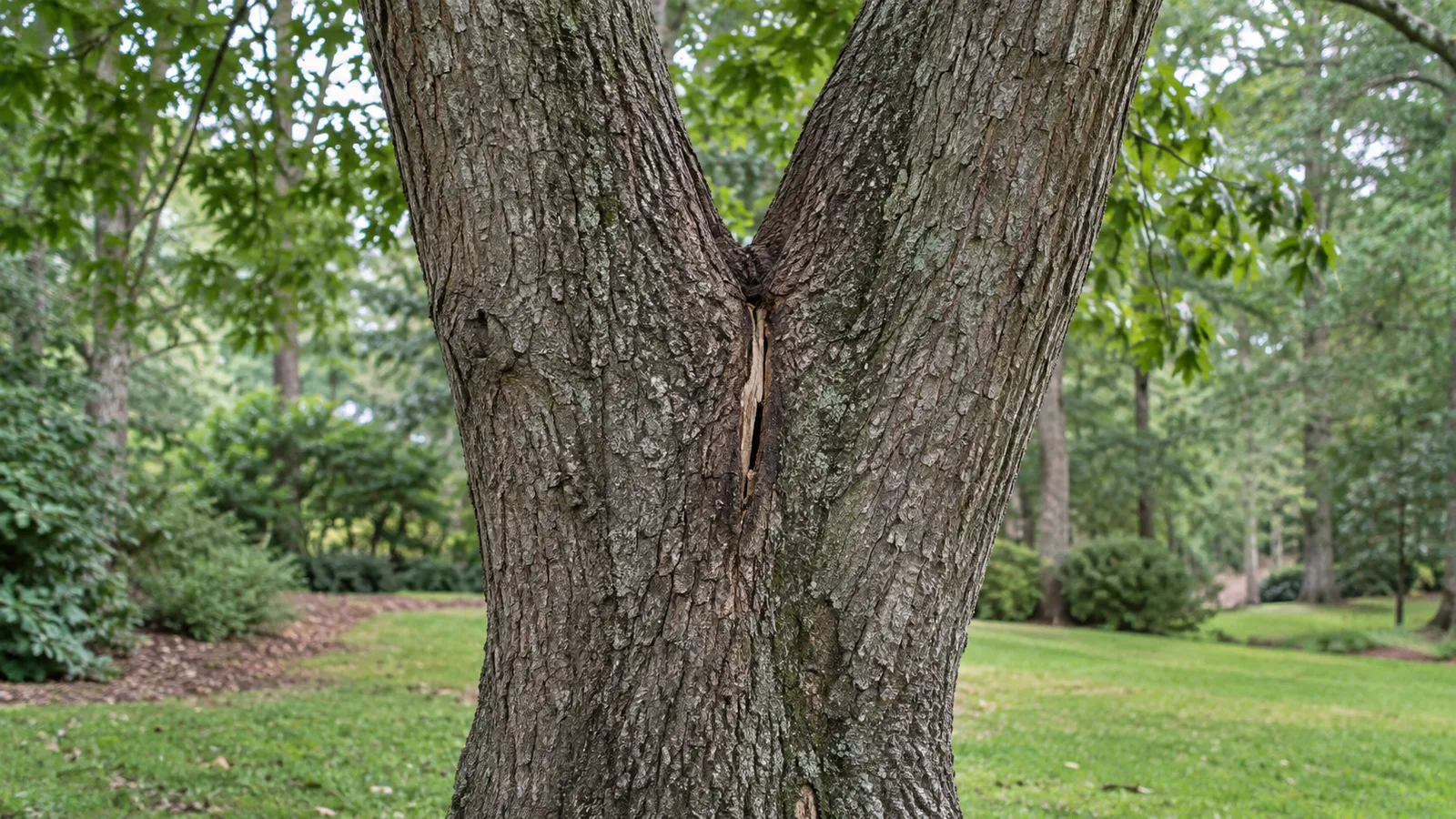
A fresh split after a storm calls for prompt assessment, not an attempt to trim one side yourself.
The shape of a branch junction is a clue, not a complete diagnosis. Consider its condition alongside the rest of the tree and what could be struck if the attachment failed.
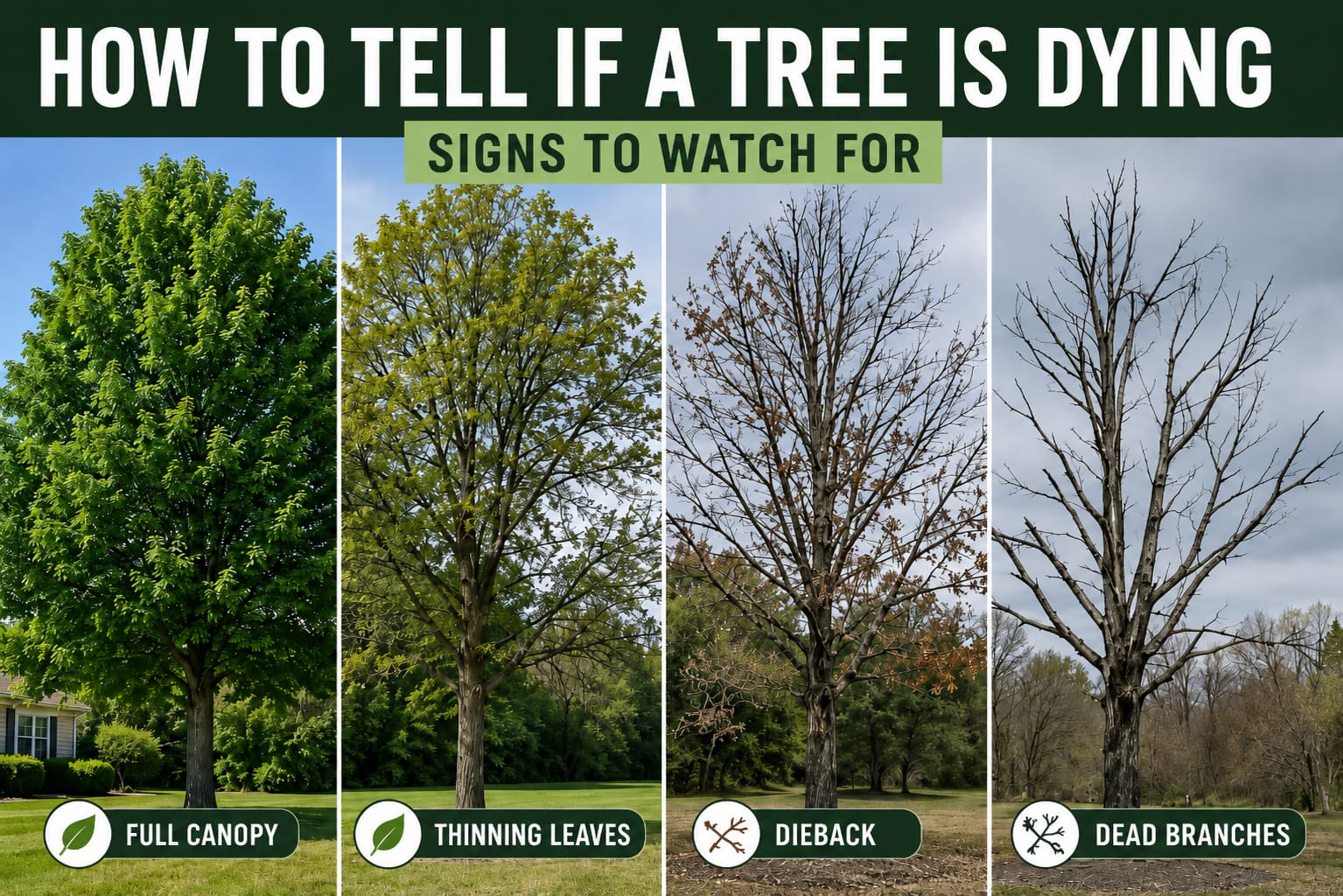
9. The Canopy Is Suddenly Thinning or Declining
Noticeable thinning, discolored foliage, or increasing dieback can indicate a health problem that deserves attention.
Report these changes, especially when they occur alongside visible damage elsewhere on the tree.
However, declining foliage does not establish that a tree is about to fall. Sparse or discolored leaves are health concerns, while structural stability also depends on the condition of the roots, trunk, and major branches.
The opposite is also true: green leaves don't prove a tree is structurally sound. Don't rely on the canopy alone to decide whether the tree needs an inspection.
10. Conditions Around the Tree Have Recently Changed
A tree's history and surroundings can matter even when there is no obvious new crack or lean.
Consider the removal of neighboring trees, substantial pruning, or topping when evaluating its condition. Also consider previous storm damage and earlier branch failures.
Think beyond the most recent storm. Mention significant changes from the last few years, including work that may have altered the tree's structure or the area around it.
These events do not automatically mean the tree will fall. They are reasons to assess it in context rather than rely on a single symptom, or the absence of one, to decide whether it is safe.
What to Do If You Think a Tree Is Going to Fall
If you notice a problem with a tree, focus first on keeping people away from the area it could strike.
A professional assessment can help determine the risk level and whether the tree needs pruning, monitoring, or removal.
- Keep the area clear and report urgent changes promptly. Stop using seating areas, play spaces, or parking spots beneath damaged limbs or near a potentially unstable tree. A sudden lean accompanied by lifting ground or moving roots needs prompt professional attention, as does a large hanging branch above an occupied area. Do not walk beneath damaged branches to inspect them or retrieve belongings.
- Leave hazardous tree work to professionals. Do not climb the tree, cut damaged limbs, or attempt to remove it yourself. If the tree or its branches touch power lines, stay clear and contact your utility. Electrical hazards require appropriately qualified crews, not ordinary yard work or a closer inspection by the homeowner.
- Arrange an on-site tree assessment. A qualified arborist can examine the roots, trunk, major branch attachments, canopy, and signs of decay. They also consider the surrounding ground, previous damage, and what the tree could hit if it failed. This helps establish whether the concern involves a particular branch, the whole tree, or a health issue that does not necessarily indicate structural instability.
- Share photographs and explain what has changed. Photos taken from a safe location can help you describe the concern, but they do not replace an on-site assessment. Mention when you first noticed the problem, whether it appeared after a storm, and any recent excavation, root cutting, major pruning, or removal of neighboring trees. Existing photographs can also help show changes over time. Do not delay an urgent call to collect pictures.
- Ask whether the tree can be retained safely. A warning sign does not automatically mean removal is the only option. Depending on the assessment, the recommendation may involve pruning hazardous limbs, reducing activity beneath the tree, monitoring its condition, or removing it. Ask the professional to explain the defect, the recommended action, and any follow-up the tree needs. Monitor a concerning tree only when that is the advised approach, not as a substitute for an assessment.
- Speak with your neighbor if the tree is on their property. Explain what you have noticed, share any photographs you took safely, and ask them to arrange a professional assessment. Keep a record of the concern and your communication. Avoid assuming who would be responsible if the tree fell; liability questions require separate, location-specific advice.
Concerned About a Tree in Seneca or the Upstate?
A professional tree assessment can help determine whether pruning, monitoring, or removal is the appropriate next step.
At Palmetto Tree Pros, we offer tree inspections, pruning, removal, and storm cleanup for homeowners in Seneca, Westminster, Walhalla, Liberty, and the surrounding Upstate South Carolina area.
We can inspect the tree and discuss the appropriate next steps with you.
You can also text us photos taken from a safe location to show us what you have noticed.
Call or text (864) 364-4362 to request a free on-site estimate.
Need a hand with your trees?
We offer free, on-site estimates across Seneca and the Upstate. Call or request a quote and we'll come take a look.